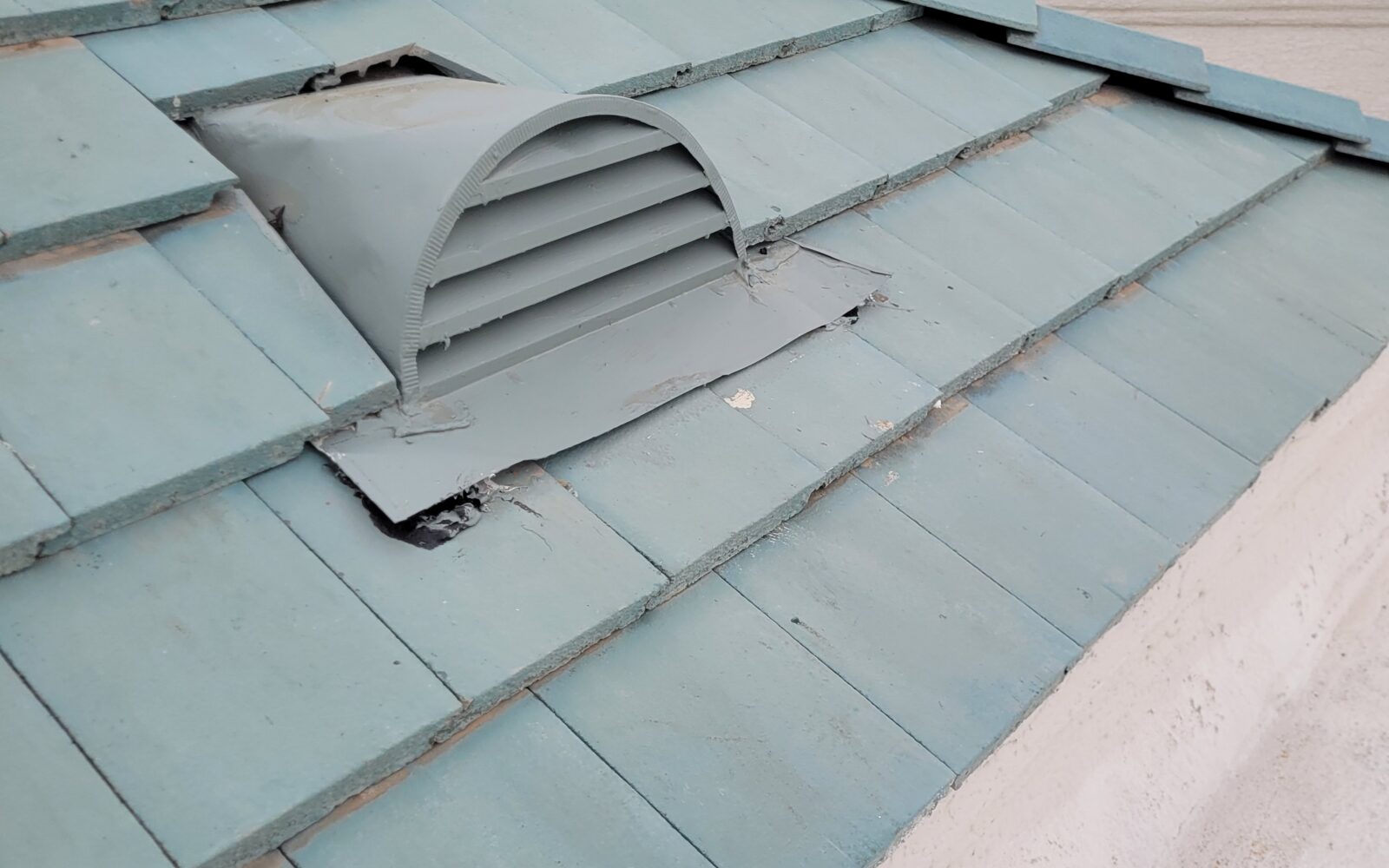
A tile roof insurance claim turns on a distinction most owners do not make until an adjuster makes it for them. The tile is the wearing surface. The underlayment beneath it is the waterproofing. A storm can damage either, they fail for different reasons, and a policy treats sudden damage and gradual deterioration very differently. Knowing which layer you are claiming for is the whole of the preparation.
Tile also brings two problems no other roof covering has in the same degree. It breaks under foot, so the inspection itself can create damage and muddy the evidence. And it is made in profiles and colours that go out of production, so a repair that would be routine on asphalt becomes an argument about whether a patched slope is an acceptable outcome.
What is actually being claimed
| Layer | What damages it | How a policy usually reads it |
|---|---|---|
| Tile | Hail impact, wind lifted debris, falling branches, foot traffic | Covered where an event caused it, excluded where wear or access did |
| Fixings and battens | Wind uplift, water that got past the underlayment, rot | Covered as part of a covered loss, excluded where decayed with age |
| Underlayment | Tearing in a wind event, impact that went through the tile, age | The common dispute: event damage against end of life |
| Deck | Prolonged water entry, impact, structural movement | Covered where the water entry itself is covered |
| Flashings and valleys | Corrosion, movement, debris, poor original detailing | Workmanship and corrosion are usually excluded |
The table is the argument in miniature. Almost every refused tile claim is refused because the insurer has placed a finding in the wear row and the owner has placed it in the event row. How insurers read roof damage generally covers the same split across other roof types.
Why a tile roof can leak with no broken tile
This surprises people and it changes how you describe the problem. Water gets past a tile roof in several ways that leave the tile looking intact from the ground:
- Wind driven rain pushed up a lap or across a hip, where the tile is doing its job and the geometry is simply being overwhelmed.
- A torn or brittle underlayment, which is the real barrier and which nothing visible from outside will reveal.
- A failed valley or flashing, which concentrates water and is where most tile roofs actually leak.
- Slipped tile, where the fixing or the batten has gone rather than the tile.
- A fractured tile that looks whole, a hairline crack that opens under thermal movement.
So a claim that says no tiles are broken, therefore nothing happened is not a sound reading, and neither is a claim that says the roof leaks, therefore the tile needs replacing. The useful statement locates the water, identifies the layer that failed and says what event is said to have caused it. Roof leak claims covers that sequence in more detail.
Documenting a tile claim
The evidence that holds up is specific, dated and comparative.
- Before anybody walks it. Photographs from the ground on every elevation, and from above if a drone is available. This is what separates storm damage from inspection damage later.
- Each finding twice. One frame showing position on the slope, one close enough to show the edge of the break.
- The soft metals. Hail marks on vents, fascia, gutters and any air conditioning fins establish that damaging hail fell here. Tile alone is a harder argument.
- The interior. Stains, damp insulation, marks on the deck underside. Photograph them with the date, and note when they first appeared.
- The tile itself. Manufacturer, profile and colour if any record survives, plus a count of broken tiles by slope.
- The weather. The date and the event, taken from a public record rather than from memory.
A written damage report assembles the same material into one document, which matters because a claim file made of separate photographs invites the question of what each one shows.
The matching problem, handled early
If the tile is discontinued, the number of tiles needed and the number obtainable are the two figures that decide what happens next. Establish both before the conversation about scope, not during it.
Salvage from a slope nobody sees is the most common partial answer, and it is worth proposing yourself rather than waiting to have it proposed. Where the shortfall cannot be covered, the policy language on matching and uniform appearance becomes the point at issue, and that language varies. Your state insurance department publishes the rules that apply where you live, and reading them is free.
Then there is depreciation, which bites hardest on exactly these roofs. A tile roof that has served most of its life is worth less than a new one, and a settlement calculated on actual cash value reflects that before anything is paid. Getting an insurer to pay for a replacement covers how the valuation term changes the figure and what releases the held back portion.
Repair, partial replacement or the whole roof
Tile makes this decision unusually open, because the tile and the layer beneath it age on different timescales. Four outcomes are common, and they are not alternatives so much as a sequence.
- Replace broken tiles only. Right where the underlayment is sound and matching tile is obtainable. The cheapest and often the correct answer.
- Lift, re underlay and reset. The tile is reused and the waterproofing is renewed. Labour heavy, material light, and the answer when the tile has life left and the underlayment does not.
- Replace one slope. Where damage is concentrated and the matching question can be contained to a single plane.
- Replace the covering. Where the tile is brittle throughout, breakage during any work would be extensive, or no matching tile exists in the quantity needed.
An estimate that jumps straight to the last of these without addressing the first three is asking the insurer a question it will decline. Repair or replacement in a claim sets out the same reasoning across roof types.
What a tile roof estimate must itemise
Tile labour is invisible on a line item that just says roof repair. Ask for these separately, because an insurer cannot pay for work it cannot see.
- Removal and stacking of sound tile, and resetting it afterwards.
- An allowance for breakage during removal, stated as a quantity.
- Replacement tile, with profile and source named.
- Underlayment type and the area to be renewed.
- Battens, fixings and any clip or wire system the tile needs.
- Valley, hip, ridge and flashing work, each listed rather than assumed.
- Access, scaffolding or edge protection where the slope requires it.
Where tile claims go wrong
- Walking before photographing, which makes every later break arguable.
- Claiming the tile when the underlayment is the problem, which invites a refusal on wear grounds.
- Accepting a scope with no allowance for lifting and resetting tile, which is where the labour cost sits.
- No allowance for breakage during the work, which is normal on brittle tile and becomes a dispute if it was not anticipated.
- Waiting. A fractured tile can take a season to leak, by which time reporting deadlines may have passed.
Where to go next
If hail is the cause, hail damage roof insurance claims covers what an adjuster looks for and how the event itself is established. If the claim has moved past assessment and into process, what to expect from a roof claim sets out the stages and the paperwork each one needs. We inspect and document roofs. We do not file, negotiate or settle claims, and nothing here is legal advice.
In this section
Common questions
Is a cracked roof tile storm damage or ordinary wear?
It depends on how it broke, and the break itself usually says. Impact leaves a fresh fracture with sharp edges and often a point of contact. Age and foot traffic leave hairline cracks, rounded weathered edges, spalling and breaks that follow an existing stress line.
- Fresh breaks look fresh, with clean unweathered edges
- Impact damage often has a visible contact mark
- Traffic cracks concentrate on walked routes and ridges
- Weathering shows as spalling, crazing and rounded breaks
- Scattered random breaks suggest an event, clustered ones suggest access
This is the distinction an adjuster is making, so document it in a way that lets somebody else make it too. Photograph each broken tile twice, once far enough back to show where it sits on the roof and once close enough to show the edges of the break. Record the date you first saw it. Where the storm is recent and the breaks are unweathered, the two facts support each other. Where neither can be established, the claim rests on an opinion rather than on evidence, and opinions are easier to refuse.
What if my roof tile has been discontinued and cannot be matched?
This is the central problem on older tile roofs and it is worth raising early. Many policies contain language about matching, and several states have rules about how far an insurer must go to achieve a reasonably uniform appearance. The answer sits in your policy wording, not in general practice.
- Read the matching or uniform appearance language in your policy
- Profile, colour and thickness all have to match, not just profile
- Salvage from an unseen slope is a common partial answer
- Blending across a slope is sometimes offered instead
- Ask your state insurance department what rules apply locally
Practical steps help more than argument. Find out the manufacturer and profile if any record exists, check whether a reclamation yard carries the tile, and count how many tiles are needed against how many could be salvaged from a hidden area such as a rear slope or a porch. Put that arithmetic in writing. A claim that shows the matching tile does not exist and quantifies the shortfall is a different document from one that simply says the tiles are old.
Does insurance cover the underlayment under a tile roof?
Where the underlayment was damaged by a covered cause, it is part of the loss. The dispute is usually about cause rather than coverage: underlayment that has simply reached the end of its life is wear, and wear is excluded under almost every policy.
- Damaged by a covered event means it is part of the repair
- Deteriorated with age means it is excluded as wear
- The tile often outlives the underlayment beneath it
- Tiles must be lifted to replace underlayment, which costs labour
- Breakage during lifting should be allowed for in the scope
This is the most expensive question on a tile roof claim, because the tile frequently remains serviceable long after the layer below it has failed. If the underlayment is the problem and no covered event caused it, the work is maintenance and the cost is yours. If a covered event tore it, the scope has to include lifting and resetting the tile, which is labour rather than material and is often the larger figure. Make sure any estimate states that explicitly.
Can an inspection crack tiles while they are walking the roof?
Yes, and it is a real risk rather than a theoretical one. Concrete and clay tile break under a misplaced foot, and brittle older tile breaks readily. That is why who walks the roof and how should be agreed before anybody goes up.
- Weight belongs on the lower third of a tile, over the batten
- Dry brittle clay tile breaks more readily than concrete
- Breakage during inspection should be recorded, not hidden
- Photographs taken before the walk settle later arguments
- Drone imagery can reduce the walked area on a fragile roof
Protect yourself on both sides of this. Ask for photographs of the roof before anybody steps on it, so damage caused on the day can be told apart from damage caused by the storm. Ask whether the inspector is experienced on tile specifically, since the technique is different from walking a membrane or shingles. And expect some breakage on a brittle roof even with careful work: an inspector who records and reports it is behaving properly, and one who does not has made your evidence unreliable.
How is hail damage to a tile roof assessed?
By looking for fracture rather than for the bruising an adjuster looks for on asphalt. Hail on tile tends to chip, crack or spall the surface, often with a visible impact point, and the damage is usually read alongside hail marks on softer items nearby.
- Chips, spalling and fractures rather than bruises
- Impact points cluster on the slopes the storm faced
- Soft metal vents and fascia confirm hail was present
- Hidden hairline fractures may only show when tiles are lifted
- A cracked tile can leak later rather than immediately
The complication peculiar to tile is delay. A fractured tile may shed water for a season before the crack opens enough to matter, by which point the storm date is well past and reporting deadlines may have run. That is the argument for having a tile roof looked at after a significant hail event even when nothing is leaking. Corroborating evidence on soft metals matters here too, because it establishes that hail of a damaging size actually fell on this building.